Can I Get A Mortgage With No Downpayment?
Susan Au-Young • August 29, 2019

The simple answer to this question is no. In order to secure mortgage financing in Canada you have to come up with at least a 5% downpayment.
Now, if you haven't set aside the 5% for a downpayment in your savings account, that is okay. There are still a few ways to get you a mortgage.
Gifted Downpayment
With the cost of living going up all the time, there is no doubt that saving for a downpayment is harder now than it once was. If you have a family member who has money and is willing to help you buy a property, they can gift you the funds for your downpayment.
The gift has to come from an immediate family member who will sign a gift letter indicating there is no schedule of repayment and that the gift doesn't have to be repaid. Proof that the money has been deposited to your account will be required through bank statements.
Gifted funds can make up part of or the entire amount of downpayment. For example; you are purchasing a property for $300k, you have $10k saved up, your parents are able to gift you the remaining $5k to make up the total 5% downpayment.
Borrowed Downpayment
If you aren't fortunate enough to have a family member who can gift you a downpayment but you have excellent credit and a high income compared to what you are borrowing, you might qualify to borrow your downpayment. This would be separate from and in addition to the mortgage funds.
It is possible to borrow your 5% downpayment as long as you include the payments in your debt service ratios.
The Canadian Mortgage and Housing Corporation (CMHC) has a program that allows you to use Non-Traditional Sources of Downpayment, which is described as "any source that is arm's length to and not tied to the purchase and sale of the property, such as borrowed funds, 100% sweat equity, lender cash back incentives."
For example; you are purchasing a property for $250k and you have a line of credit with a $20k limit but no outstanding balance. You could use that line of credit to borrow the $12,500 needed for the 5% downpayment assuming you can afford to carry the additional debt of the payments from the line of credit. Typically this is figured at 3% of the outstanding balance, in this case $375 per month.
RRSP Homes Buyers Plan
Okay, so you don't have the money set aside in your savings, but you do have a nice little RRSP going. Assuming you are a first time home buyer, you can access the money from your RRSP Tax Free to use as a downpayment. You are able to access up to $25k individually or $50k as a couple and the money has to be paid back into your RRSPs over the next 15 years.
Below is the Home Buyer's Plan (HBP) PDF document from Canada Revenue Agency for your reference.
Share

RECENT POSTS
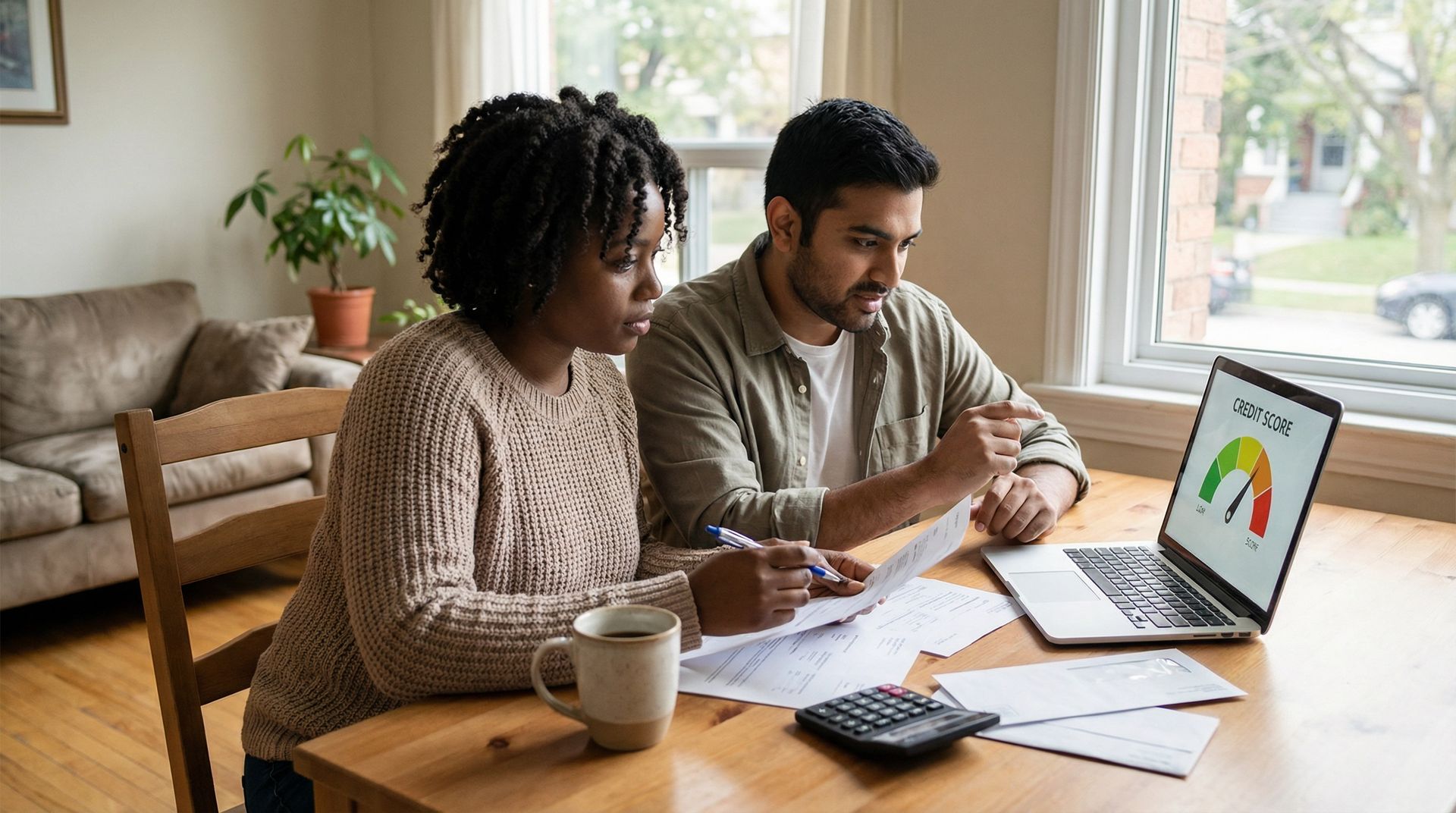
Your credit score is one of the most important numbers in your financial life — especially when it comes to getting a mortgage. But for most Canadians, how that number actually gets calculated remains a bit of a mystery.

If you’re looking to do some home renovations but don’t have all the cash up front to pay for materials and contractors, here are a few ways to use mortgage financing to bring everything together. Existing Home Owners - Mortgage Refinance Probably the most straightforward solution, if you’re an existing homeowner, would be to access home equity through a mortgage refinance. Depending on the terms of your existing mortgage, a mid-term mortgage refinance might make good financial sense; there’s even a chance of lowering your overall cost of borrowing while adding the cost of the renovations to your mortgage. As your financial situation is unique, it never hurts to have the conversation, run the numbers, and look at your options. Let’s talk! If you're not in a huge rush, it might be worth waiting until your existing term is up for renewal. This is a great time to refinance as you won’t incur a penalty to break your existing mortgage. Now, regardless of when you refinance, mid-term or at renewal, you’re able to access up to 80% of the appraised value of your home, assuming you qualify for the increased mortgage amount. Home Equity Line of Credit Instead of talking with a bank about an unsecured line of credit, if you have significant home equity, a home equity line of credit (HELOC) could be a better option for you. An unsecured line of credit usually comes with a pretty high rate. In contrast, a HELOC uses your home as collateral, allowing the lender to give you considerably more favourable terms. There are several different ways to use a HELOC, so if you’d like to talk more about what this could look like for you, connect anytime! Buying a Property - Purchase Plus Improvements If you’re looking to purchase a property that could use some work, some lenders will allow you to add extra money to your mortgage to cover the cost of renovations. This is called a purchase plus improvements. The key thing to keep in mind is that the renovations must increase the value of the property. There is a process to follow and a lot of details to go over, but we can do this together. So if you’d like to discuss using your mortgage to cover the cost of renovating your home, please connect anytime!